

Professional players have several requirements from electronic wind instruments:
High-quality sound
Rich timbre: Professional players need the instrument to offer a wide variety of timbres that can accurately simulate the sounds of traditional wind instruments such as saxophones, trumpets, and flutes, and even create unique and innovative timbres. For example, an electronic wind instrument should be able to produce the warm and mellow tone of a saxophone, the bright and penetrating tone of a trumpet, and the clear and gentle tone of a flute.
Good sound fidelity: The sound reproduced by the electronic wind instrument should be highly faithful, with clear details, accurate pitch, and strong expressiveness. This allows players to fully demonstrate their skills and musical ideas, and also enables the audience to better appreciate the music.
Stable sound quality: Whether in different playing environments or under long-term use, the sound quality of the electronic wind instrument should remain stable, without significant fluctuations or distortions.
Advanced performance features
Pitch and tone control: Professional players require precise control over pitch and tone. The instrument should have sensitive and accurate pitch adjustment functions, such as the ability to easily play sharp and flat pitches, and support microtonal adjustments for exploring more complex musical styles. In addition, it should also provide various tone control options, such as adjusting the brightness, warmth, and resonance of the sound, to meet the needs of different musical expressions.
Dynamic response: The instrument needs to have excellent dynamic response capabilities, which can accurately reflect the player's strength and speed changes in blowing, and produce corresponding changes in sound volume and tone. This allows players to create rich musical expressions through different blowing intensities and rhythms.
Effects and functions: A variety of built-in effects and functions are also essential for professional players, such as reverb, delay, chorus, and distortion effects. These effects can enhance the musicality and creativity of the performance, enabling players to create more unique and captivating musical pieces.
Durability and reliability
High-quality materials and construction: The body of the electronic wind instrument should be made of high-quality materials, such as durable plastics, metals, or composites, to ensure its sturdiness and durability. The internal components should also be of high quality and reliable, able to withstand the wear and tear of long-term use.
Stable performance: The instrument should have stable performance, with low failure rates and good compatibility with other equipment. It should be able to work stably in different environments and under various conditions, ensuring that professional players can use it with confidence during performances and recordings.
Ergonomic design
Comfortable grip and playing posture: The design of the instrument should be ergonomic, allowing players to hold it comfortably for a long time and maintain a correct playing posture. This helps reduce fatigue and discomfort during long periods of playing, enabling players to focus on their performance.
Accessible controls: The control buttons, knobs, and switches on the instrument should be arranged reasonably and be easy to access and operate. This allows players to quickly adjust various parameters during the performance, improving the efficiency and fluency of the performance.
Compatibility and connectivity
Compatibility with other equipment: The electronic wind instrument should be compatible with a variety of external equipment, such as amplifiers, speakers, mixers, and music production software. This enables players to easily connect the instrument to other equipment to expand its functions and applications, and also facilitates the integration of the instrument into different music production and performance systems.
Connectivity options: It should support various connectivity methods, such as USB, MIDI, and audio interfaces, to facilitate data transmission and communication with other devices. This is particularly important for professional players who often need to collaborate with other musicians or use the instrument in a digital music production environment.
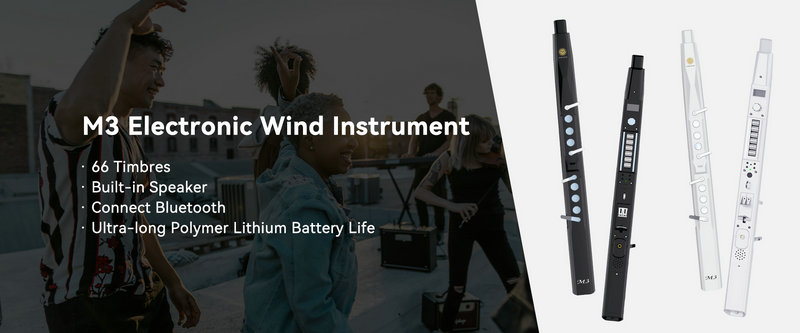
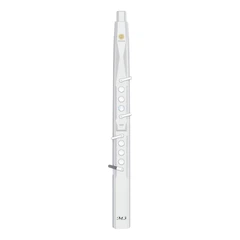
SUNRISE MELODY M3 Electronic Wind Instrument - The best-selling Electronic Wind Instrument
. 66 Timbres
. Built-in Speaker
. Connect Bluetooth
. Ultra-long Polymer Lithium Battery Life