

After electric wind instruments connect to MIDI (Musical Instrument Digital Interface), a whole new world of possibilities unfolds.
Expanding Sound Sources
The connection to MIDI enables electric wind instruments to access an extensive range of sound sources. By linking up with various sound modules and software synthesizers, players can explore a vast library of different instrument sounds and unique special effects. It's like having a virtual orchestra at your fingertips. Whether you want your electric wind instrument to mimic the majestic tones of a grand piano, the delicate plucks of a harp, or even futuristic electronic sounds that defy imagination, MIDI makes it possible. Moreover, this seamless integration with virtual orchestras and music production software allows you to play along with pre-recorded tracks or create intricate musical arrangements. Triggering different instruments simultaneously gives you the power to compose complex and rich compositions that would be difficult to achieve otherwise.
Controlling Music Software
Electric wind instruments can function as powerful controllers for digital audio workstations (DAWs) when connected via MIDI. The keys and controls on the instrument can be used to input notes and adjust parameters in real time. This provides a more intuitive and expressive way of creating music compared to using a mouse and keyboard. You can effortlessly control volume, pan, and a variety of effects, adding a layer of creativity and spontaneity to your music production. Additionally, MIDI-enabled electric wind instruments can control lighting and stage effects. This not only enhances the visual appeal of live performances but also creates a more immersive experience for the audience. The synchronization of music with dynamic lighting changes can transform a simple performance into a spectacular show.
Facilitating Learning and Practice
MIDI connectivity also offers great benefits for learning and practice. You can connect to educational software and apps that provide interactive lessons, exercises, and valuable feedback on your playing. These programs can analyze your pitch accuracy, rhythm, and breathing technique, offering personalized suggestions for improvement. MIDI recording and playback is another useful feature. You can record your performances and listen back to identify areas that need work. Slowing down or looping sections of your playing allows you to practice difficult passages more effectively, helping you to refine your skills and grow as a musician.
Enabling Collaboration and Sharing
With MIDI, musicians can collaborate and share their creations like never before. Sending and receiving MIDI data over a network enables musicians in different locations to work on projects together in real time. You can play together, exchange ideas, and create music remotely as if you were in the same room. Sharing MIDI files online is also a great way to connect with other musicians around the world. Uploading your performances or compositions in MIDI format allows others to listen, provide feedback, and even collaborate further. This sharing of ideas and resources can inspire new creations and foster a sense of community among musicians.
Can MIDI controllers be used to control multiple electric wind instruments simultaneously?
How do I connect my electric wind instrument to MIDI?
Are there any specific MIDI controllers or software that are compatible with my electric wind instrument?
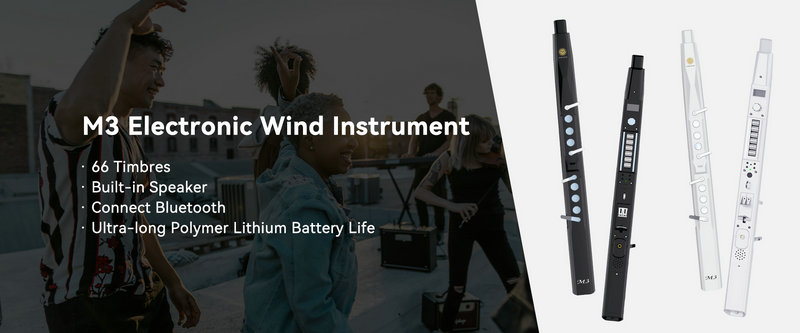
SUNRISE MELODY M3 Electronic Wind Instrument - The best-selling Electronic Wind Instrument
. 66 Timbres
. Built-in Speaker
. Connect Bluetooth
. Ultra-long Polymer Lithium Battery Life