
The applications of MIDI with EWIs in different music styles are as follows:
Classical music:
Precise performance control: In classical music performances, there is often a need for precise control of playing details. MIDI can be connected to EWIs. By setting specific MIDI controllers such as key pressure and breath control, performers can accurately control the volume, timbre, start time, and duration of each note, thus highly restoring the delicate emotional expression and complex playing techniques in classical music works. For example, when playing Mozart's "Clarinet Concerto in A Major", using MIDI to control the timbre changes and dynamic responses of EWIs can better interpret the light and lively melody in the work.
Multi-instrument collaboration and arranging: Large-scale classical music works usually involve the collaboration of multiple instruments. MIDI can enable EWIs to seamlessly connect and communicate with other instruments such as pianos and string instruments. In the arranging process, creators can use MIDI information to synchronize the performances of various instruments and ensure the precise coordination of different instruments in rhythm, speed, and pitch, creating a harmonious and grand classical music performance effect. For example, in the orchestration of a symphony, integrating the performance of EWIs with the performance of the entire orchestra through MIDI can enhance the overall expressiveness of the work.
Jazz:
Improvisation assistance: Jazz highly values improvisation. Performers often need to create on the spot according to the musical atmosphere and the performances of other musicians. MIDI can provide various preset harmony and rhythm templates for EWIs. During improvisation, performers can quickly call up these templates as references or bases to stimulate creative inspiration. At the same time, it ensures that the harmony and rhythm of improvisation are within the style framework of jazz, making it more in line with the style characteristics of jazz. For example, when playing the jazz standard "Summertime", EWIs performers can rely on the harmony progress provided by MIDI to carry out improvisation more freely.
Achieving unique sound effects: Jazz pursues unique sound effects and timbre changes. By connecting various sound effect devices or plugins through MIDI, performers can endow EWIs with special sound effects such as distortion, wah-wah, and delay, creating a unique sound texture with jazz style and enhancing the expressiveness and appeal of music. For example, when playing some jazz passages with blues style, adding appropriate distortion effects can better create that lazy and casual atmosphere.
Pop music:
Automated performance and programming: In the production of pop music, in order to achieve complex music arrangements and precise rhythm control, automated performance and programming techniques are often used. MIDI allows the playing actions of EWIs to be recorded as MIDI data and then edited and arranged. Producers can easily create complex playing sequences such as repeated melody passages and precise rhythm patterns, and can modify and adjust them at any time, greatly improving production efficiency and the richness of music. For example, when producing the accompaniment of a pop song, using MIDI to record the performance of EWIs and then performing copying, pasting, and editing can quickly build a full music background.
Integration with electronic music elements: Pop music often fuses electronic music elements. MIDI can connect EWIs with electronic music devices such as electronic synthesizers and drum machines, realizing the mixing and superimposition of various electronic timbres and EWIs timbres. This can create novel and fashionable music effects and meet the pursuit of diversity and innovation in pop music. For example, in the chorus part of a pop song, let the sound of EWIs be combined with the sound effects of an electronic synthesizer to create a music atmosphere full of vitality and modernity.
Folk music:
Traditional timbre simulation and expansion: Different folk musics have their unique traditional instruments and timbres. Using MIDI technology, performers can connect to specific sound libraries or samplers to let EWIs simulate the timbres of various folk instruments such as erhu and flute in Chinese music and sitar in Indian music, thus enriching the diversity of timbres in folk music performances. At the same time, innovation and expansion can be carried out based on these traditional timbres to create new timbres that have both national characteristics and a modern sense. For example, when playing music with Chinese national style, use EWIs to simulate the timbre of erhu and add some special sound effect processing through MIDI to make it more in line with the aesthetic of modern music.
Adapting to the rhythm characteristics of folk music: The rhythms of folk music often have unique styles and complex rhythms. MIDI can help EWIs better adapt to these rhythm characteristics. By setting specific rhythm patterns and parameters, the performance of EWIs can accurately fit the rhythm patterns of folk music, such as the complex drum rhythms in African music and the passionate rhythms in Latin music. Moreover, performers can use MIDI to adjust the speed and intensity changes of rhythm in real time to show the vitality and charm of folk music rhythms.
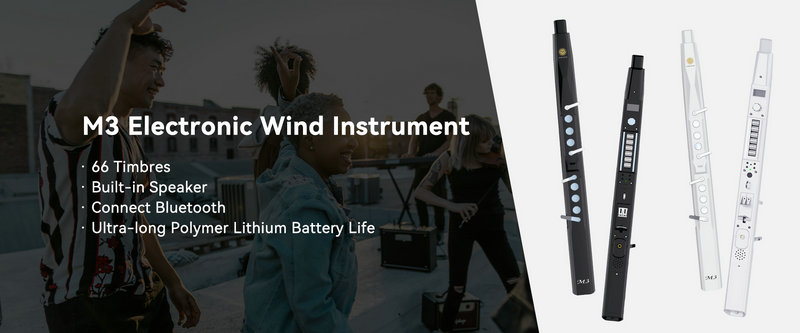
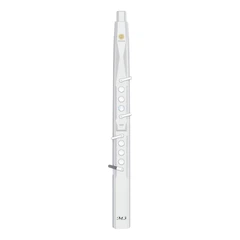
SUNRISE MELODY M3 Electronic Wind Instrument - The best-selling Electronic Wind Instrument
. 66 Timbres
. Built-in Speaker
. Connect Bluetooth
. Ultra-long Polymer Lithium Battery Life