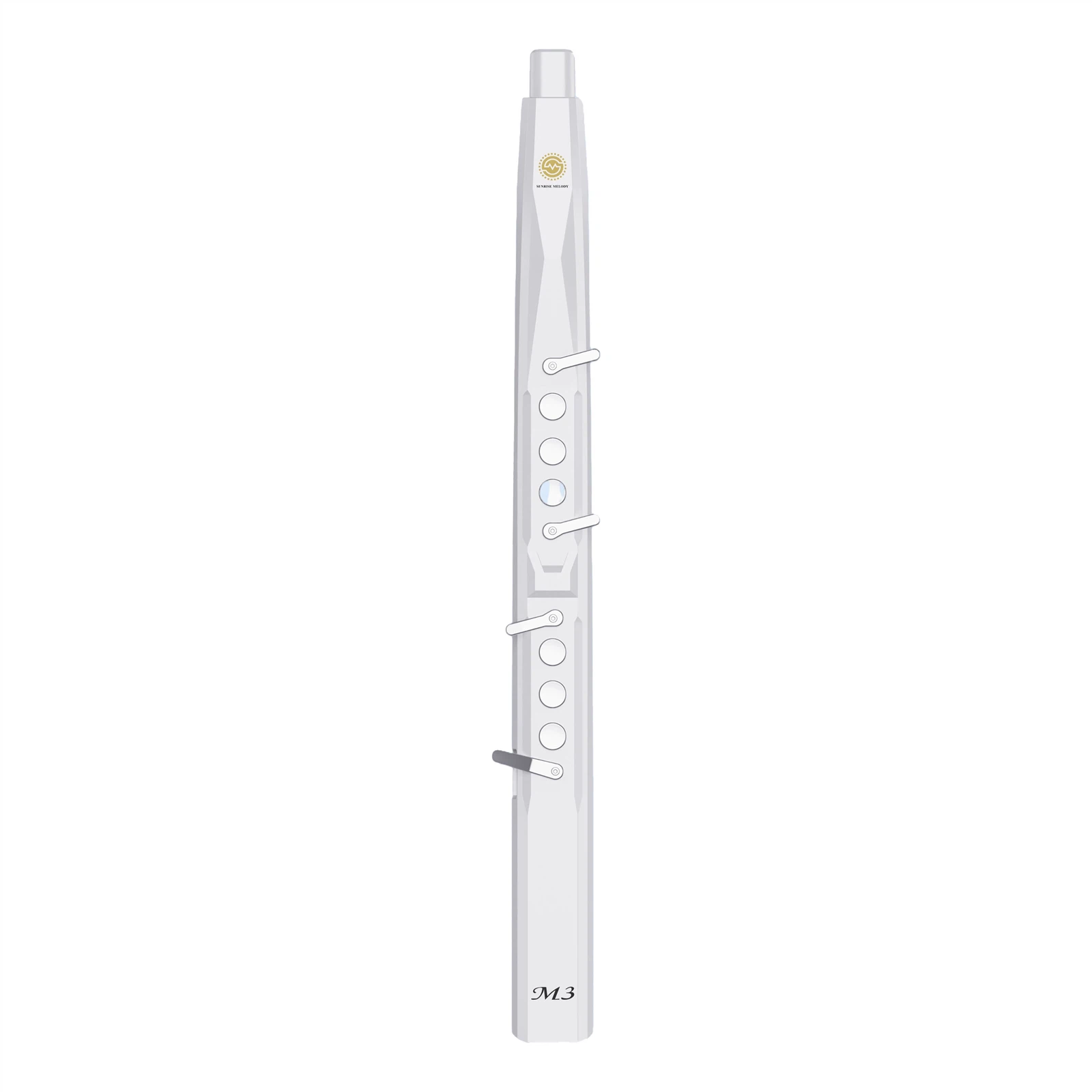


The differences between an electronic wind instrument (EWI) and a traditional wind instrument lie in several aspects:
1.Sound Production: Traditional wind instruments produce sound through the vibration of air columns within the instrument itself. For example, in a flute, air is blown across a hole, causing the column of air inside to vibrate and produce the sound. In contrast, an EWI generates sound electronically. It converts the player's breath and fingering input into digital signals that trigger pre-recorded or synthesized sounds.
2.Versatility of Sounds: EWIs offer a vast range of available sounds and effects. You can imitate various traditional wind instruments as well as access a plethora of non-traditional and synthetic sounds. Traditional wind instruments, on the other hand, are typically associated with their specific, characteristic tones.
3.Portability and Setup: EWIs are often more lightweight and portable, and they usually require less setup. They can connect to external devices like amplifiers or audio interfaces easily. Traditional wind instruments may be bulkier and sometimes need additional equipment like reeds or mouthpieces to be properly set up.
4.Learning Curve: While both have their learning challenges, the technique and embouchure development for traditional wind instruments can be more demanding initially. EWIs may be somewhat easier for beginners to produce sounds initially, but mastering advanced techniques and expression can still be complex.
5.Maintenance: Traditional wind instruments may require regular servicing, cleaning, and adjustments to keep them in good playing condition. EWIs have less mechanical maintenance but may need software updates and occasional checks of the electronics.
6.Expression and Dynamics: Traditional wind instruments offer a more direct and organic connection between the player's breath and expression. The subtleties of breath control and embouchure have a profound impact on the sound's dynamics and timbre. EWIs can simulate this to some extent but may not provide the exact same level of intuitive expression.
7.Cost: The cost of EWIs can vary widely, but some high-quality models can be expensive. Traditional wind instruments also have a range of prices, but entry-level options may be more affordable.
For example, if you want to play a wide variety of musical styles and sounds and have an interest in modern technology, an EWI might be appealing. However, if you appreciate the traditional acoustic nature and the historical and cultural aspects of playing a specific wind instrument, a traditional one might be your choice.
The SUNRISE MELODY M3 / M5, the famous Electronic Wind Instrument company in CN.
M5 with 88 sounds, and M3 66 sounds, the price is economical, with abundant functions: 5 octaves True roller design of the octave wheel, Connect Bluetooth, Built-in speaker, Three vibrato modes: Automatic, semi-automatic, bite, five fingering.