


The five main classifications of instruments are:
String Instruments: These include instruments such as the violin, viola, cello, double bass, guitar, and harp. The sound is produced by vibrating strings. For example, the beautiful and soulful sound of a violin in a classical concerto or the strumming of a guitar in a folk song.
Wind Instruments: This category can be further divided into woodwind and brass. Woodwind instruments like the flute, clarinet, oboe, and bassoon produce sound by blowing air across a reed or through a hole. Brass instruments such as the trumpet, trombone, French horn, and tuba generate sound by buzzing the lips into a mouthpiece. A famous example is the powerful sound of a trumpet in a jazz band or the mellow tones of a flute in a symphony.
Percussion Instruments: Percussion instruments are struck, shaken, or scraped to create sound. This includes drums, cymbals, tambourines, xylophones, and marimbas. Think of the driving rhythm of a drum set in a rock performance or the delicate chimes of a xylophone in a children's song.
Keyboard Instruments: This classification includes the piano, organ, synthesizer, and harpsichord. The sound is produced by pressing keys that trigger mechanisms to strike or activate strings or electronic components. The piano is often the centerpiece of many musical compositions, providing a wide range of tones and expressions.
Electronic Instruments: With the advancement of technology, electronic instruments like the electric guitar, electric bass, and various electronic synthesizers have become prominent. They can produce a vast array of sounds and effects, often used in contemporary music genres like electronic dance music (EDM). The electric guitar's distorted sound in a heavy metal song is a prime example.
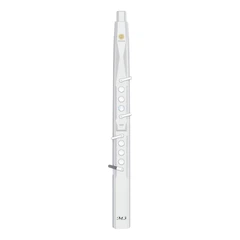
SUNRISE MELODY M3 Electric Blowpipe
Are you searching for a fun and easy way to learn a new instrument?
Look no further. Designed for beginners and amateur players, the M3 offers you an enjoyable music journey.
Learning a new fingering is too time-consuming for you?
With the M3, you only need to master one fingering, and you'll have access to a library of 66 timbres. This simplifies the learning process and gets you playing music faster.
Want to enhance your performance or practice more efficiently?
The M3 features Bluetooth input connectivity, allowing you to connect your phone or tablet to the instrument. Play accompaniments during your performance, or utilize a sheet music scanner for practice sessions.
The M3 has an eight-octave metal roller, which enables swift note selection across different scales. Additionally, the silica-gel responsive mouthpiece, equipped with air-pressure and bite sensors, assists beginners in honing their skills with precise control over their playing technique.
