
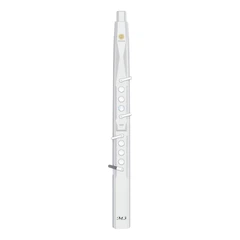


1. **Timing selection skills**EWI /electronic-wind-instrument/electric-saxophone-ewi.html
- **Matching teaching content**: When teaching works of different musical styles, choose matching timbres. For example, when teaching classical music, you can choose to simulate the timbres of flute, violin, piano, etc., because these timbres are more common in classical music works. For example, when teaching Mozart's "Serenade", using the timbres of simulated violin can better restore the style of the work. When teaching folk music, choose to simulate the timbres of folk instruments such as erhu, guzheng, bamboo flute, etc. For example, when teaching "Colorful Clouds Chasing the Moon", using the timbres of simulated guzheng can add a strong folk flavor.
- **Stimulate students' interest**: In order to increase students' interest in learning, some interesting timbres can be selected in time. For example, when explaining the fantasy and science fiction themes of music, use special timbres such as simulated spaceship sound effects or alien creatures' calls to let students use their imagination to create their own music stories.
2. **Fingering teaching skills**
- **Analogy with other instruments**: The fingering of the electric wind instrument is similar to that of some traditional instruments. If students have a foundation in other wind instruments, such as saxophone and bamboo flute, teachers can teach the fingering of electric blowpipe by analogy with these instruments. For example, some fingering of electric blowpipe is similar to saxophone. Teachers can point out the similarities between the key layout and fingering operation of the two, so that students can master the fingering of electric blowpipe faster. For students without a foundation, they can start with the most basic fingering, such as the placement of fingers, the pressure of pressing, etc., and through simple fingering exercises, such as scale exercises that only use a few basic keys to play, let students gradually become familiar with the fingering.
- **Visual teaching assistance**: Use modern technology to conduct visual teaching. For example, use a projector to enlarge the teacher's fingering movements and display them on the screen, so that students can see the movement trajectory of the fingers and the operation process of the keys more clearly. Or make a fingering teaching video so that students can watch each fingering detail repeatedly, which is convenient for students to learn and review independently after class.
3. **Breath control skills**
- **Demonstration and feeling**: The teacher should first demonstrate the correct breath control. Through their own performance, let students intuitively see and hear the impact of breath strength and length on the sound. For example, when playing a long note, the teacher can start with a weak breath, gradually increase it, and then weaken it, so that students can feel the musical expression brought by the change of breath. At the same time, let the students put their hands on their abdomens and feel the movement of the teacher's abdomen when breathing, so as to understand the application of abdominal breathing in electric wind instrument performance.
- **Practice method guidance**: Provide students with specific breath practice methods. For example, let students practice the stability of breath by blowing a piece of paper. Put a piece of paper near your mouth and blow the paper with even breath to keep the paper at a stable angle. You can also practice breath control by blowing a candle. At a certain distance from the candle, blow the flame with your breath so that the flame shakes but does not go out, so as to exercise the strength and accuracy of the breath.
4. **Performance skills**
- **Glissando technique teaching**: Glissando is one of the commonly used performance skills in electric wind instrument performance. The teacher can first explain the principle of glissando, that is, to achieve a smooth transition of pitch by sliding the fingers on the keys or the gradual change of breath. Then demonstrate, such as performing glissando between two adjacent notes, so that students can observe and listen to the effect of glissando. Then let the students practice, starting with simple glissando in unison (such as glissando from 1 to 1), and gradually transitioning to glissando between different pitches, and pay attention to the control of the speed and amplitude of the glissando during the practice.
- **Teaching of vibrato skills**: Vibrato can make music more vivid and infectious. The teacher should explain to the students that there are two main ways of vibrato, one is to produce vibrato by vibrating the keys quickly and regularly with the fingers, and the other is to produce vibrato by regular vibration of the breath. In teaching, the teacher can demonstrate these two vibrato methods separately and let the students compare their effect differences. And let the students practice vibrato in simple melodies, such as adding vibrato effects to a long tone, slowing down the frequency of the vibrato at the beginning, and gradually speeding up the frequency as the practice deepens, so that the vibrato is more natural.
/electronic-wind-instrument/electric-saxophone-ewi.html


