
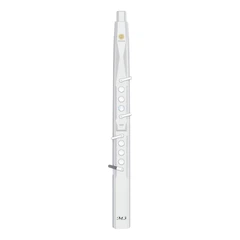


The fingering design of electric wind instruments /electronic-wind-instrument/electric-saxophone-ewi.htmlhas certain rationality, but the evaluation of its rationality varies from person to person, which is specifically reflected in the following aspects:
1. **Advantages**:
- **Ergonomic**: The key position of the electric wind instrument is usually designed according to the length of human fingers. For most people, it is comfortable and natural to hold and press the keys, and it is convenient to play. For example, the body design and key layout of some electric wind instruments allow the performer to easily press the required keys during the performance, and will not cause difficulty in finger operation due to unreasonable key positions.
- **Similar to traditional wind instrument fingering**: The fingering design of many electric wind instruments refers to the fingering of traditional wind instruments such as saxophone. For people who have a foundation in wind instruments such as saxophone, it will be easier to learn the fingering of electric wind instruments. Because they are already familiar with similar fingering systems, they only need to adapt and adjust to quickly master the fingering of electric wind instruments.
- **Rich fingering functions**: The electric blowpipe not only has basic scale fingering, but also has some special fingering functions, such as sharp, flat, glissando, pitch bend, vibrato, etc. These fingering functions can increase the expressiveness of music and make the performance more colorful.
- **Easy to switch and adjust**: Some electric blowpipes can switch different fingering modes, or set custom fingerings. Players can choose and adjust according to their preferences and performance needs, which has high flexibility.
2. **Disadvantages**:
- **Touch-type buttons need to be adapted**: Some electric blowpipes have touch-type buttons, which is different from the feel of traditional wind instruments. In traditional wind instruments, the keys need to be pressed firmly or pressed to the bottom to be considered pressed, while touch-type keys are considered pressed when they touch, which may cause players to accidentally touch them when they first come into contact, and it takes some time to adapt.
- **Lack of tactile feedback of real instruments**: Compared with traditional wind instruments, the keys of electric blowpipes lack real mechanical feedback when pressed, which may affect the control and expressiveness of performance for some players who are accustomed to the feel of traditional instruments.
For beginners, the learning difficulty of the electric blowpipe is relatively small, but it also requires a certain amount of time and practice to master. Specifically reflected in the following aspects:
1. **Easy to get started**:
- **Relatively low breath requirements**: The electric blowpipe does not have as strict breath control requirements as traditional wind instruments, and does not require high breath skills like playing saxophones, trumpets and other instruments. Even if beginners do not have good breath control ability, they can still make sounds smoothly, and can adjust parameters such as volume and timbre through the settings of the electric blowpipe to make up for the lack of breath.
- **Pitch and notes are easy to master**: The pitch and notes of the electric blowpipe are relatively simple, easy to understand and master. Its range is relatively small, generally only a few octaves, and the changes in fingering are relatively few. Beginners can master basic pitch and note fingering in a short time.
- **One fingering can play multiple keys**: Many electric blowpipes can play multiple keys with one fingering, which greatly reduces the difficulty for beginners to learn different fingerings. For example, if you learn a saxophone fingering or a flute fingering, you can play music in various modes without spending a lot of time learning the special fingering for each mode.
2. **Aspects with certain challenges**:
- **Accuracy of fingering**: Although the fingering of the electric blowpipe is relatively simple, it still requires a certain amount of practice to achieve accurate fingering. Especially when playing fast music, the performer needs to be able to press the corresponding keys quickly and accurately, which is a challenge for the finger flexibility and coordination of beginners.
- **Mastery of special fingering techniques**: Special fingering techniques such as glissando, pitch bend, and vibrato require beginners to spend time practicing and mastering them. The use of these techniques can increase the expressiveness of music, but for beginners, it may take some time to understand and master their operation methods and key points of techniques.
/electronic-wind-instrument/electric-saxophone-ewi.html


