
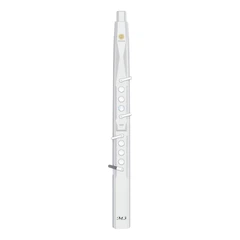


When playing an electric wind instrument, maintaining a good posture and embouchure is very important for the performance effect and body relaxation. Here are some specific points:
### Posture
- **Standing posture**: Stand with your feet shoulder-width apart, the center of gravity of the body evenly distributed on the feet, and the knees naturally relaxed, not bent or stiff. Keep your back straight and your chest slightly raised, but don't raise your chest too much to avoid affecting the smoothness of your breath. Let your shoulders droop naturally, relax your arms, bend your elbows slightly, and hold the electric wind instrument in front of you, keeping an angle of about 30-45 degrees to your body, which is convenient for finger key operation and conducive to the stable output of breath.
- **Sitting posture**: Choose a comfortable chair of appropriate height, sit in the front third of the chair, keep your waist straight, and don't lean on the back of the chair. Keep your legs naturally apart, shoulder-width or slightly wider, place the electric wind instrument on your thighs, also keeping a certain angle with your body, and hold the electric wind instrument naturally with both hands to play.
### Mouth shape
- **Position of the mouthpiece**: Gently put the mouthpiece into your mouth. The position of the mouthpiece is generally between one-third and one-half of the mouthpiece. The specific position can be fine-tuned according to personal comfort and playing habits. Too much or too little may affect the control of timbre and breath.
- **State of lips**: Lips are naturally relaxed, not too tight or pouty, and the corners of the mouth are slightly pulled to the sides, showing a smile. The upper and lower lips are gently attached to the mouthpiece. Do not bite or squeeze the mouthpiece hard to avoid affecting the smoothness of the breath and the quality of the timbre.
- **Space in the mouth**: Keep a certain amount of space inside the mouth, just like the state of the mouth when yawning, but do not open your mouth too wide. The tongue is naturally flat on the bottom of the mouth, and the tip of the tongue lightly touches the inside of the lower teeth, and do not block the air inlet of the mouthpiece. During the playing process, the size and shape of the oral space can be appropriately adjusted according to different pitch and timbre requirements.
### Breath support
- **Breathing method**: Use chest-abdomen combined breathing method, that is, when inhaling, the abdomen and chest expand outward at the same time, and feel the breath filling the entire abdomen and chest; when exhaling, the abdomen and chest gradually contract, and the breath is exhaled evenly and steadily. This breathing method can provide sufficient breath support, making the performance more durable and powerful.
- **Breath control**: When playing, according to the rhythm, pitch and emotional expression of the music, flexibly control the strength, speed and stability of the breath. Generally speaking, when playing bass, the breath should be slow and deep; when playing high notes, the breath should be fast and concentrated. At the same time, pay attention to the continuity of the breath to avoid staccato or unstable breath.
By maintaining a good posture and mouth shape, as well as correct breath support, the performance of the electric blowpipe can be better exerted to play beautiful and pleasant music. It requires continuous practice and adjustment to gradually find the most suitable playing posture and mouth shape for yourself.


