

To improve the performance skills of electric wind instruments, you can follow these steps:
I. Familiarize Yourself with the Instrument
Learn the instrument's features and controls: Thoroughly understand the various buttons, knobs, and settings on your electric wind instrument. This includes understanding how to adjust volume, tone, and effects.
Practice basic fingerings and scales: Spend time mastering the fundamental fingerings and scales to build a solid foundation for more advanced playing.
II. Develop Proper Breathing Techniques
Deep breathing exercises: Engage in regular deep breathing exercises to increase your lung capacity and control. This will help you produce a stronger and more consistent sound.
Breath support: Learn to use your diaphragm to support your breath and control the airflow. This will give you more power and stability when playing.
III. Work on Tone Production
Experiment with different mouthpieces and reeds: Try different mouthpieces and reeds to find the combination that gives you the best tone quality.
Vary your embouchure: Adjust your lip and facial muscle tension to create different tones and expressions.
Practice long tones: Spend time playing long, sustained tones to develop a rich and resonant sound.
IV. Master Finger Dexterity
Scale and arpeggio practice: Regularly practice scales and arpeggios to improve your finger speed and dexterity.
Technical exercises: Incorporate technical exercises such as trills, slurs, and tonguing to enhance your playing skills.
V. Explore Effects and Processing
Learn to use effects: Familiarize yourself with the different effects available on your electric wind instrument, such as reverb, delay, and distortion. Experiment with these effects to add depth and texture to your playing.
Use external processors: Consider using external effects processors or software to further expand your sonic palette.
VI. Listen and Learn
Listen to professional players: Listen to recordings of professional electric wind instrument players to gain inspiration and learn new techniques.
Attend concerts and workshops: Attend live concerts and workshops to observe and learn from experienced players.
VII. Practice Regularly
Set aside dedicated practice time: Make a schedule and stick to it. Regular practice is essential for improving your performance skills.
Practice with a metronome: Use a metronome to improve your timing and rhythm.
Record yourself: Record your practice sessions and listen back to identify areas for improvement.
By following these steps and being consistent in your practice, you can significantly improve your performance skills on electric wind instruments.
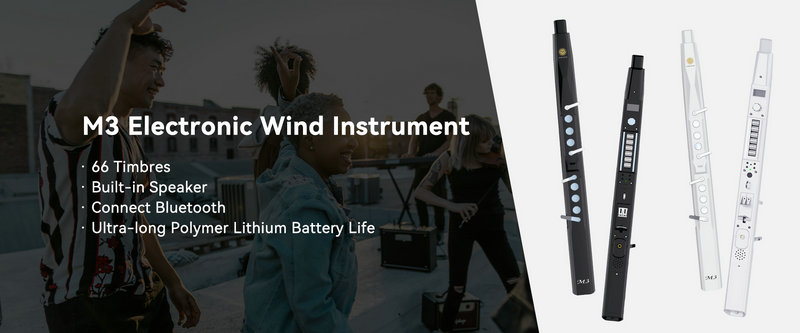
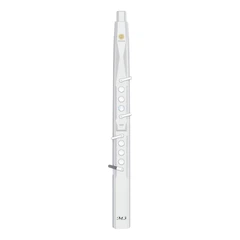
SUNRISE MELODY M3 Electronic Wind Instrument - The best-selling Electronic Wind Instrument
. 66 Timbres
. Built-in Speaker
. Connect Bluetooth
. Ultra-long Polymer Lithium Battery Life