
Adjusting the mouthpiece sensitivity of an electronic wind instrument is a crucial step in customizing your playing experience. Here are some additional methods and considerations:
Instrument-Specific Controls:
Some electric wind instruments have dedicated buttons or knobs specifically for adjusting mouthpiece sensitivity. These controls might be labeled clearly or might require some exploration of the instrument's interface. For instance, one instrument might have a "sensitivity dial" that allows you to turn it clockwise or counterclockwise to increase or decrease the sensitivity.
Check if your instrument has multiple sensitivity settings for different ranges of play. For example, there could be a setting for soft playing, which requires a more sensitive mouthpiece to pick up subtle breath changes, and a setting for louder, more energetic playing that might need a slightly less sensitive mouthpiece to avoid overreacting to strong breaths.
External Hardware Devices:
In some cases, you can use external hardware devices to adjust the mouthpiece sensitivity. For example, a MIDI controller or a breath controller accessory might be able to fine-tune the sensitivity of the electric wind instrument. These devices can offer more precise control and flexibility than the instrument's built-in controls.
Some MIDI interfaces or audio interfaces might also have settings that can indirectly affect the mouthpiece sensitivity by adjusting the signal processing or amplification of the instrument's input.
Trial and Error Process:
Adjusting the mouthpiece sensitivity is often a trial-and-error process. Start with a moderate setting and then play different passages and styles of music to see how the instrument responds. If you find that the sensitivity is too high and you're getting unwanted sounds or overreactions, gradually lower it until you achieve a balance.
Conversely, if the sensitivity is too low and you're not getting enough response from the instrument, increase it gradually until you find the sweet spot that allows for expressive playing without sacrificing control.
Keep in mind that different musical pieces and playing situations might require different sensitivity settings. For a solo performance, you might want a more sensitive setting to showcase your nuances and expressions, while in a band setting, you might need to adjust the sensitivity to blend well with other instruments.
Seek Professional Advice:
If you're having trouble adjusting the mouthpiece sensitivity or are unsure about the best settings for your playing style, consider seeking advice from a professional musician who is experienced with electric wind instruments. They can offer insights based on their own playing experiences and might be able to demonstrate different techniques for adjusting sensitivity.
Music stores or instrument repair shops might also have staff who can provide guidance on adjusting the settings of your specific instrument. They might even be able to do some initial adjustments for you to get you started on finding the right sensitivity.
Remember that finding the perfect mouthpiece sensitivity is a personal journey that depends on your individual playing style, musical preferences, and the specific requirements of the music you're playing. With patience and experimentation, you can achieve a setup that allows you to play your electric wind instrument to its fullest potential.
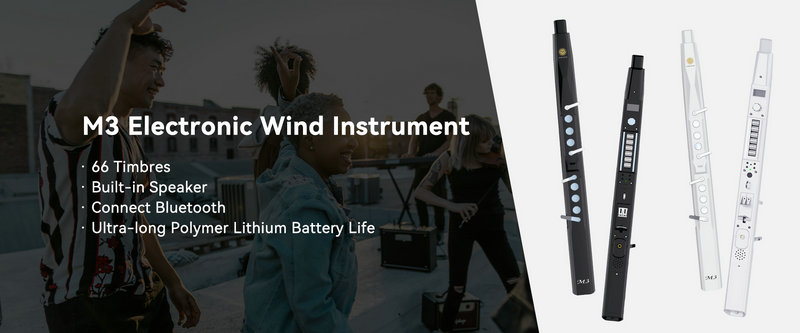
SUNRISE MELODY M3 Electronic Wind Instrument - The best-selling Electronic Wind Instrument
. 66 Timbres
. Built-in Speaker
. Connect Bluetooth
. Ultra-long Polymer Lithium Battery Life