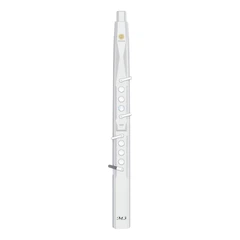


The Hulusi, also known as the "calabash flute" or "gourd flute," is a traditional Chinese free-reed wind instrument that has evolved over time in terms of its construction and playing techniques. Here's an overview of its history and evolution:
Origin and Popularity:
The Hulusi is particularly popular among the ethnic minorities in Yunnan Province, China, especially among the Dai people. It is a free-reed instrument, similar to the Western harmonica, but with a distinct construction and sound.
Traditional Construction:
The Hulusi is traditionally made from a gourd with three bamboo pipes inserted into the bottom end of the gourd wind chest. The central pipe has finger holes for making different tones, and the two outer pipes are typically drone pipes .
Sound Production:
The Hulusi is known for its soft, beautiful, and melodious sound, often compared to the quality of silk. The instrument's unique sound is produced by the vibration of a free reed inside the instrument.
Playing Techniques:
The Hulusi is played by blowing air into the gourd while covering the finger holes on the main pipe to produce melody notes. The drone pipes produce continuous background notes, adding a unique texture to the music.
Historical Evolution:
The Hulusi has evolved from the "sheng," an ancient Chinese mouth-blown instrument. It originated in the Central Plains and later spread to the southwestern minority areas. The structure of the Hulusi still maintains the legacy of ancient musical instruments.
Modern Developments:
With the integration of modern technology and traditional craftsmanship, the Hulusi has been innovated and developed. New types of Hulusi have emerged, retaining the traditional sound while adding practical functions and improving performance experience.
Versatility in Music:
The Hulusi is used in various musical genres, including folk music, classical music, and even in contemporary compositions. Its versatility and unique sound have made it a popular choice for musicians and composers.
Artistic Expression:
The Hulusi is not only a musical instrument but also a symbol of cultural heritage, reflecting the rich musical traditions of the ethnic minorities in Yunnan.
Famous Pieces:
Some classical works for the Hulusi include "Moonlight under the Phoenix Tail Bamboo," "The Wedding Vow," "Peacocks and Phoenix Tail Bamboo," "Lusheng Love Song," "Deep in Bamboo Forest," and "The Butterfly Spring".
The Hulusi's unique construction and sound have made it a cherished instrument in the musical landscape of southwestern China, and it continues to be a popular choice for both traditional and contemporary music. Its evolution over time showcases the blend of tradition and innovation in Chinese musical instruments.
SUNRISE MELODY Electric hulusi flute instrument
Chinese hulusi flute instrument it has a unique ethnic style and is extremely ethnic.
The Chinese Hulusi Flute Instrument is a distinctive and charming musical instrument. It originated from ethnic minorities in China, mainly in Yunnan Province.
The Hulusi is made of a gourd and bamboo pipes. Its unique structure gives it a gentle and mellow sound. The instrument typically has several holes on the pipes, allowing players to produce different pitches.
The Hulusi is often used to play folk music, expressing the emotions and stories of local people. Its melodies are usually simple yet beautiful, carrying a rich cultural heritage.
Playing the Hulusi requires specific breathing and fingering techniques. Mastery of these techniques enables players to create captivating music.
In modern times, the Hulusi has gained popularity beyond its original regions, becoming a beloved instrument for many music lovers.