

The Hulusi, also known as the "calabash flute," is a traditional Chinese wind instrument that has evolved over time. Here's an overview of its working principle based on the provided search results:
Construction:
The Hulusi is constructed from a gourd that serves as the resonator and several bamboo pipes. The main pipe has finger holes for producing different tones, and the side pipes emit continuous bass notes, providing a harmonic background.
Sound Production:
The instrument produces sound through the vibration of a free reed, which is enclosed in the mouthpiece. When air is blown into the mouthpiece, the reed vibrates and creates sound waves that travel down the instrument's body.
Finger Holes:
The main pipe of the Hulusi has finger holes that, when covered or uncovered, produce different pitches or notes. The side pipes do not have sound holes but contribute to the instrument's overall sound by producing continuous fifths.
Playing Techniques:
Players control the Hulusi by covering and uncovering the finger holes on the main pipe to play melodies, while the side pipes provide a constant harmony. Modern Hulusi may have additional holes on the side pipes for more versatility.
Drone Pipes:
One of the distinguishing features of the Hulusi is its drone pipes, which produce a single note while the melody is played on the central tube. These can be switched on or off to change the instrument's sound characteristics.
Materials:
Traditional Hulusi are made from bamboo, but they can also be crafted from wood, metal, plastic, or ceramic. The material can affect the instrument's sound, with wood generally producing a warmer sound and metal a brighter projection.
Tuning:
The tuning of the Hulusi is crucial for maintaining its sound quality. The pitch primarily depends on the length of the bamboo pipe and the vibration frequency of the reed. Players can fine-tune the instrument by slightly adjusting the reed's position or shape.
Maintenance:
Proper maintenance of the Hulusi includes keeping the reed dry and clean and storing the instrument in a suitable environment. Changes in temperature and humidity can affect the instrument's sound and intonation.
The Hulusi's unique structure and sound have made it a beloved instrument in Chinese music, particularly among the ethnic minorities in Yunnan Province. Its evolution from traditional to modern designs has expanded its applications in various musical genres.
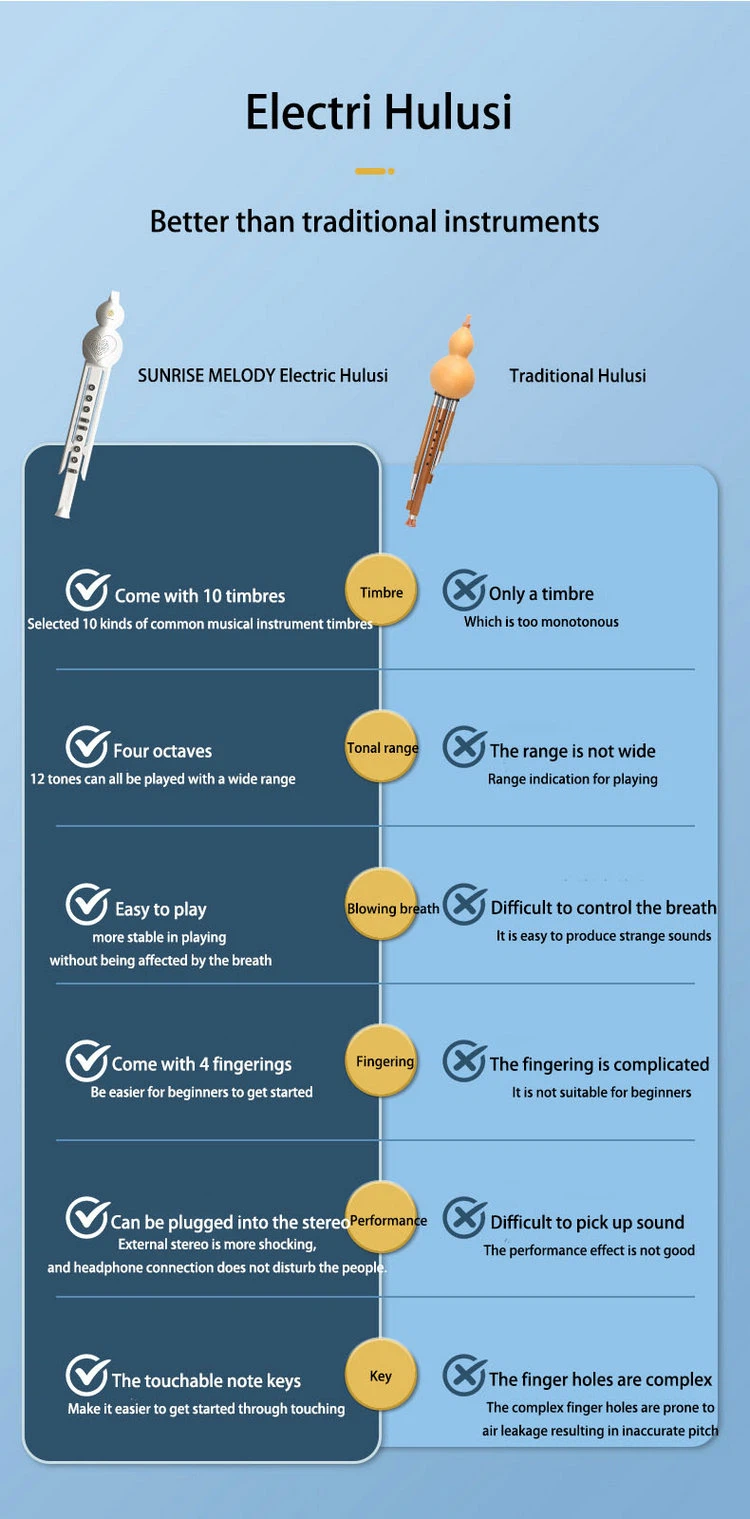
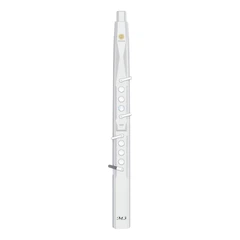
SUNRISE MELODY Electric hulusi flute instrument
Chinese hulusi flute instrument it has a unique ethnic style and is extremely ethnic.
The Chinese Hulusi Flute Instrument is a distinctive and charming musical instrument. It originated from ethnic minorities in China, mainly in Yunnan Province.
The Hulusi is made of a gourd and bamboo pipes. Its unique structure gives it a gentle and mellow sound. The instrument typically has several holes on the pipes, allowing players to produce different pitches.
The Hulusi is often used to play folk music, expressing the emotions and stories of local people. Its melodies are usually simple yet beautiful, carrying a rich cultural heritage.
Playing the Hulusi requires specific breathing and fingering techniques. Mastery of these techniques enables players to create captivating music.
In modern times, the Hulusi has gained popularity beyond its original regions, becoming a beloved instrument for many music lovers.