

Electronic wind instruments and traditional wind instruments differ in sound quality and projection in the following ways:
Sound QualityTimbre Purity:
Traditional Wind Instruments: Generally, the timbre of traditional wind instruments is purer and more natural. For example, a wooden flute can produce a clear and mellow sound, and the timbre is highly consistent with the natural vibration of the air column in the instrument. The materials and manufacturing processes of traditional instruments have been refined over a long time, resulting in a relatively stable and unique timbre. Brass instruments like the trumpet have a bright and penetrating timbre, which is directly related to the vibration of the metal material. Each traditional wind instrument has its own distinct timbre characteristics, which are difficult to replicate exactly.
Electronic Wind Instruments: The timbre of electronic wind instruments can be highly variable. They can simulate a wide variety of timbres of different wind instruments through digital technology and preset sound banks, but there may be a certain degree of digital flavor. Although the advanced models can achieve high similarity in timbre simulation, there is still a gap compared with the natural timbre of traditional instruments. For example, when an electronic wind instrument simulates a saxophone sound, it may lack the subtle nuances and rich overtones of a real saxophone.
Sound Stability:
Traditional Wind Instruments: The sound stability of traditional wind instruments is affected by factors such as the player's breathing control, lip vibration, and finger operation. Novice players may have unstable sound output due to insufficient skills, such as unsteady airflow or inaccurate finger placement. However, for skilled players, after long-term practice and mastery of skills, they can achieve relatively stable sound output. But even for professional players, there may still be some slight fluctuations in sound in different performance states.
Electronic Wind Instruments: Electronic wind instruments have relatively stable sound output. Once the settings are adjusted, the sound will be relatively consistent in different playing sessions, without being affected by factors such as the player's physical condition and momentary performance fluctuations. This is because the electronic system can accurately control the generation and output of sound signals, ensuring the stability of the sound.
ProjectionVolume and Penetration:
Traditional Wind Instruments: The volume and projection of traditional wind instruments are limited to a certain extent. Although brass instruments like the trumpet can produce relatively high volume and strong penetration, other woodwind instruments such as the flute and clarinet may have relatively weaker volume and projection. In large concert halls or outdoor performances, the projection ability of some traditional wind instruments may need to be enhanced through the use of microphones or other amplification devices.
Electronic Wind Instruments: Electronic wind instruments usually have stronger volume and better projection. They can be connected to amplifiers, speakers, and other external equipment to adjust the volume according to the needs of the performance, and can easily fill large performance spaces. Even in noisy environments, the sound can be clearly heard, which provides great convenience for performers in different performance scenarios7.
Directionality of Sound Projection:
Traditional Wind Instruments: The sound projection of traditional wind instruments has a certain directionality. The sound is mainly emitted from the bell or the opening of the instrument, and the spread direction and range are related to the structure and design of the instrument. For example, the sound of a saxophone is mainly projected forward from the bell, and the sound spread in other directions is relatively weaker.
Electronic Wind Instruments: The sound projection of electronic wind instruments can be adjusted through the settings of the connected speakers or sound systems. By adjusting the position and angle of the speakers, the direction and range of sound projection can be controlled more flexibly, enabling the sound to cover a wider area or be focused in a specific direction according to the needs of the performance.
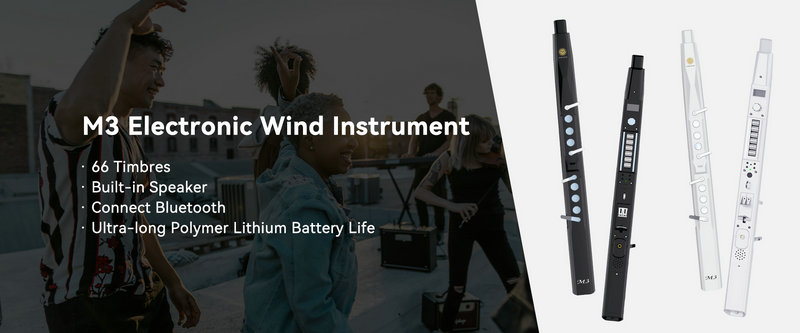
SUNRISE MELODY M3 Electronic Wind Instrument - The best-selling Electronic Wind Instrument
. 66 Timbres
. Built-in Speaker
. Connect Bluetooth
. Ultra-long Polymer Lithium Battery Life