
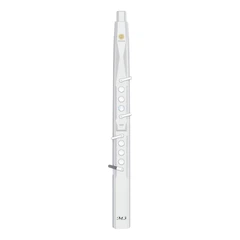


Digital wind instruments and traditional wind instruments have some differences in playing techniques, mainly in the following aspects:
Sound Production and Control:
Traditional Wind Instruments: Rely on the player's breath control, embouchure (the way the mouth forms around the mouthpiece), and finger manipulation to produce sound. The nuances of sound, such as volume, tone color, and expressiveness, are highly dependent on the player's physical skills and ability to control these elements. For example, in a flute, the player needs to adjust the blowing force, the angle and tightness of the lips on the mouthpiece to change the pitch and tone.
Digital Wind Instruments: While basic breath control may still be involved to some extent, they often have additional electronic controls and settings. These can include buttons, sliders, or touch-sensitive pads that allow the player to directly manipulate various parameters such as pitch bend, modulation, effects (like reverb, delay), and sound synthesis options. This gives more immediate and precise control over the sound characteristics, enabling the creation of a wider range of sounds and effects that may not be possible with traditional instruments through physical means alone.
Fingering and Note Execution:
Traditional Wind Instruments: Have specific fingering systems that are based on the instrument's design and acoustic properties. Players need to master the correct finger positions and movements to produce different notes accurately. The fingering can be complex and may require a lot of practice and muscle memory to achieve fluency. For instance, a saxophone has different keys and combinations that need to be pressed to play various pitches, and the transitions between notes need to be smooth and precise.
Digital Wind Instruments: May also have a fingering system similar to traditional instruments for basic note playing, but they can offer more flexibility and variation. Some digital wind instruments might allow for alternative fingering configurations or even the ability to assign different functions to the keys, providing more creative possibilities in note execution. Additionally, they may have features like auto-tuning or quantization that can correct or adjust the pitch of the notes played, making it easier for beginners to achieve accurate intonation.
Expression and Dynamics:
Traditional Wind Instruments: Expression is achieved mainly through the player's breath control, articulation (how the notes are started, sustained, and ended), and vibrato. The player can vary the intensity, duration, and quality of the sound by adjusting the breath pressure, speed, and airflow. For example, a trumpet player can use different breath techniques to create a wide range of dynamics from soft and gentle to loud and powerful, and add vibrato for a more expressive sound.
Digital Wind Instruments: In addition to breath control (if applicable), they offer a variety of electronic means to enhance expression. Players can use built-in effects processors, such as different types of modulation effects (chorus, flange), to add movement and texture to the sound. There may also be options for setting up pre-programmed expression curves or using expression pedals/controllers that can be assigned to specific parameters to create dynamic changes in real-time during performance. This allows for more complex and unique expressions that might be difficult to achieve solely with traditional playing techniques.
Interaction with Technology and External Devices:
Digital Wind Instruments: Are often designed to interface with other digital devices and software. They can be connected to computers, music production software, or other MIDI-compatible instruments. This enables players to integrate the digital wind instrument into a digital music production environment, use it to control virtual instruments or software synthesizers, and take advantage of features like sequencing, recording, and editing. For example, a digital saxophone can be connected to a computer and used to record and edit performances directly in a digital audio workstation, and then combine it with other digital music elements to create a complete composition.
Traditional Wind Instruments: Generally, have a more limited ability to interact directly with technology in this way. While some traditional instruments may have pickups or microphones attached to them for amplification or recording purposes, they do not typically have the built-in digital interfaces and capabilities for seamless integration with the extensive range of digital music tools and software that digital wind instruments offer.
SUNRISE MELODY M1 Electronic Wind Instrument
. Revisit the passion and dreams of youth
. M1 electric clarinet wind instrument -- The good news for beginners
. Rich and diverse timbres
. Powerful functions and easy operation
. Perfect after-sales service


