

Digital wind instrument players can achieve a realistic sound through several key approaches:
Firstly, mastering the instrument's settings and controls. This includes understanding and adjusting parameters such as tone, pitch, and volume to closely mimic the characteristics of the desired acoustic instrument. For instance, if aiming for a realistic trumpet sound, fine-tuning the settings to replicate the brassy tone and the specific range of dynamics is crucial.
Secondly, practicing proper breath control techniques. Just like with traditional wind instruments, the way a player breathes into the digital instrument greatly affects the sound quality. Consistent and controlled breathing helps create a more natural and fluid sound. Consider the example of a digital clarinet; controlled inhalation and exhalation can imitate the smoothness and expressiveness of an acoustic clarinet.
Thirdly, choosing high-quality digital wind instruments and accessories. Better-quality instruments often offer more accurate sound reproduction and a wider range of customizable options. A top-of-the-line digital saxophone, for example, might have advanced sensors and sound processing capabilities that enhance the realism of the output.
Finally, using appropriate amplification and audio processing equipment. This can help shape and enhance the sound to make it more lifelike. Equalizers, compressors, and reverbs can be adjusted to add depth and warmth to the digital sound, similar to the acoustics of a performance space
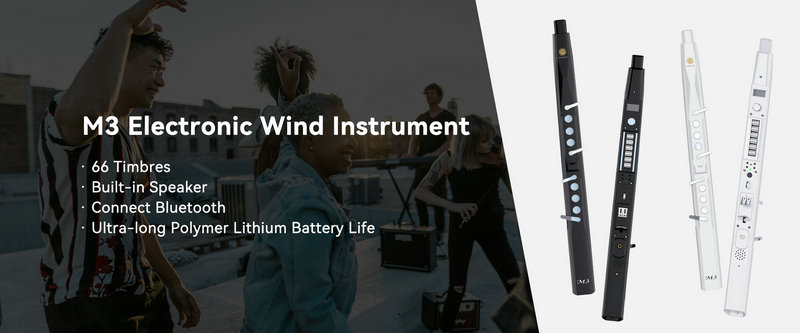
SUNRISE MELODY M3 Electronic Wind Instrument - The best-selling Electronic Wind Instrument
. 66 Timbres
. Built-in Speaker
. Connect Bluetooth
. Ultra-long Polymer Lithium Battery Life