

Yes, traditional instruments and electronic wind instruments can be played simultaneously. Here are several ways and considerations for this:
1. Ensemble Settings
Orchestral and Band Contexts
In a large orchestra or concert band, an electronic wind instrument can be added to complement the traditional instruments. For example, an electronic wind instrument with a unique synthesized sound can add an otherworldly or modern touch to a piece that is mainly performed by traditional string, brass, and woodwind instruments.
In a jazz band, an electronic wind instrument can blend well with traditional saxophones, trumpets, pianos, basses, and drums. The electronic wind instrument might be used to create ambient sounds or mimic the sounds of rare or modified traditional instruments, enhancing the overall sonic palette.
Chamber Music
In a chamber music setting, a combination of a traditional flute and an electronic wind instrument can create interesting dialogues between the pure, acoustic tone of the flute and the more processed or electronically enhanced sounds of the EWI. The two instruments can play in harmony, counterpoint, or alternate passages to create a diverse musical experience.
2. Hybrid Performances
Fusion Genres
In music fusion genres like world music fusion or electro - acoustic fusion, traditional instruments from different cultures (such as the sitar from India or the pipa from China) can be paired with electronic wind instruments. The traditional instruments provide a sense of cultural authenticity and unique timbres, while the electronic wind instruments can add modern rhythmic patterns, effects, or extended sonic ranges.
In rock or pop music, an electric guitar and an electronic wind instrument can play together. The guitar can provide the driving rhythm and power chords, while the electronic wind instrument can add melodic lines with various synthesized sounds, from soft and dreamy to sharp and edgy.
3. Technical Considerations
Amplification and Sound Balance
When playing together, it is crucial to ensure that the amplification levels of both the traditional and electronic instruments are properly adjusted. Traditional acoustic instruments may need to be miked up appropriately to match the volume and projection of the electronic wind instrument, which is often directly amplified or connected to a sound system.
Equalization (EQ) settings also play a role in achieving a harmonious sound. Different instruments have different frequency ranges, and by adjusting the EQ, the sounds can be blended more effectively. For example, if a traditional violin sounds too bright when combined with an electronic wind instrument, the high - frequency EQ on the violin mic can be reduced slightly.
Tuning and Intonation
While traditional instruments may require manual tuning, electronic wind instruments can often be tuned more precisely and may even have automatic tuning features. However, it is still necessary to ensure that both types of instruments are in tune with each other. Some electronic wind instruments can be adjusted to match the tuning system of traditional instruments, such as A = 440 Hz.
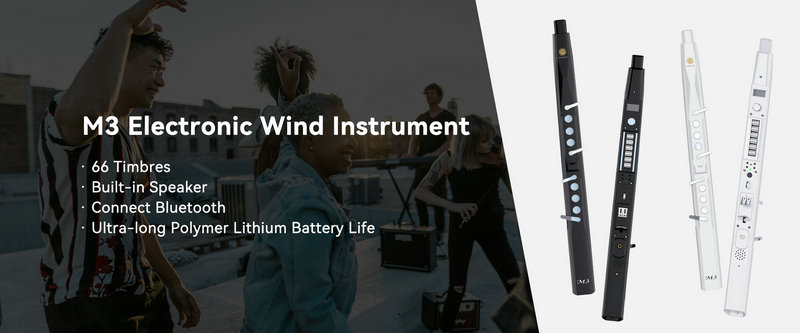
SUNRISE MELODY M3 Electronic Wind Instrument - The best-selling Electronic Wind Instrument
. 66 Timbres
. Built-in Speaker
. Connect Bluetooth
. Ultra-long Polymer Lithium Battery Life