



Company Profile
Since 2015, shenzhen shengyang musical instruments technology co., ltd. From china has been a professional manufacturer of digital musical instruments for over more than 10 years.Has more than 60,000 square meters of working shops,our overseas sales market is in shenzhen.The electronic piano, electronic wind instrument, silicone electronic drums, and other items are among our primary offerings.
Why Choose Us
Our factory
Since 2015, shenzhen shengyang musical instruments technology co., ltd. From china has been a professional manufacturer of digital musical instruments for over more than 10 years.
Our product
Has more than 60,000 square meters of working shops,our overseas sales market is in shenzhen,the electronic piano, electronic wind instrument, silicone electronic drums, and other items are among our primary offerings.
Production market
Our digital wind instruments and pianos have been tested in a variety of settings and are especially good for classrooms, beginning students, and more experienced players. Around the world, a lot of families and kids are interested in listening to music, but their budgets prevent them from doing so.
Our service
We really seek for seasoned foreign distributors, wholesalers, and other sales partners that are enthusiastic about expanding music's global reach.Whether you're searching for digital wind instruments and pianos that are ready to sell for your market or custom items, we have a large selection of affordable choices. Please contact us to discuss additional information.
Related Product

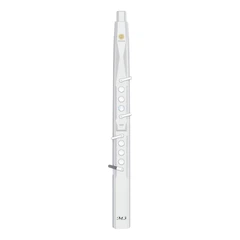
XR3000 Electronic Saxophone EWI Digital Wind Instrument
XR3000 electronic saxophone ewi digital wind instrument octave wheel true roller design five octaves allow you to play songs of any style and melody with ease the true roller of the octave wheel makes the switch more coherent the touch glide makes the performance smoother.

The battery-operated sunrise melody m3 wind instrument makes learning and performing both effortless and enjoyable, regardless of your proficiency level. Boasting 66 built-in sounds to select from, intuitive recorder-like fingering, and a sensitive breath detector that offers an excellent tone instantly, you possess all that is necessary to embark on your musical adventure.

M1 Electric Clarinet Wind Instrument
For beginners, the SUNRISE MELODY M1 electronic wind instrument is an ideal choice. Unlike traditional musical instruments that require long-term basic practice and complex skill accumulation, even if you have no musical foundation at all, you can master the basic playing methods and play wonderful notes in a short time.

If you have always desired to play a musical instrument, then this ewi electronic wind instrument is the quickest means to fulfill your aspiration. This enjoyable and modern wind instrument is extremely easy to learn, and thus you will be able to play along with your favorite tunes in no time at all. The fingering is straight forward to comprehend, and there aren't any complex chords to master like those of the piano, guitar, or ukulele, and its compact design can accompany you anywhere you go.

Digital Musical Wind Instruments XR3000
If you have always desired to play a musical instrument, then this ewi electronic wind instrument is the quickest means to fulfill your aspiration. This enjoyable and modern wind instrument is extremely easy to learn, and thus you will be able to play along with your favorite tunes in no time at all. The fingering is straightforward to comprehend, and there aren't any complex chords to master like those of the piano, guitar, or ukulele, and its compact design can accompany you anywhere you go.

XR3000 Digital Saxophone For Beginners
Are you seeking a fun and effortless way to master a new ewi electronic wind instrument? Search no more. Tailored for beginners and amateur musicians, the sunrise melody xr3000 electronic saxophone ewi provides you with an enjoyable musical adventure.

Electronic Flute Instrument XR3000
Wish to boost your performance or practice more productively? The sunrise melody xr3000 electronic wind instrument saxophone comes with bluetooth connectivity, enabling you to link the instrument to your phone or tablet. Play accompaniments during your performance, or make use of a sheet music scanner for practice sessions.

XR3000 Midi Wind Controller EWI
XR3000 Midi Wind Controller EWI Large-capacity battery Long-lasting battery life for smooth performances Built-in 1600mAh lithium battery Practiceand perform more worry-free.

XR3000 Midi Flute Controller EWI
XR3000 Midi Flute Controller EWI 3.7V 1600mAh, 8 hours of playing time using the rechargeable lithium-ion battery , silicone material, A silica-gel responsive mouthpiece with air-pressure and bite sensors to control volume and pitch dynamics precisely.
What is Electronic Wind Controller?
A electronic wind controller, sometimes referred to as a wind synthesizer, is an electronic wind instrument. It is usually a midi controller associated with one or more music synthesizers.Wind controllers are most commonly played and fingered like a woodwind instrument, usually the saxophone, with the next most common being brass fingering, particularly the trumpet. Models have been produced that play and finger like other acoustic instruments such as the recorder or the tin whistle. The most common form of wind controller uses electronic sensors to convert fingering, breath pressure, bite pressure, finger pressure, and other gesture or action information into control signals that affect musical sounds.
Advantages of Electronic Wind Controller
Versatility
With advancements in technology, electronic wind controller can produce a range of instrument sounds, making them highly adaptable for musicians like you who are interested in exploring different genres of music, from jazz and classical to pop and beyond.
Ease of play
Traditional wind instruments can be challenging to learn, with complex fingerings and embouchure control. Electronic wind controller, however, offer an easier path to learning, with intuitive fingerings and no need for embouchure control.
Portability
Electronic wind controller save you from lugging around with a heavy and bulky box. Its lightweight and portable design makes it easy to carry wherever you go. If you worry about bothering others while practicing, electronic wind controller allow you to practice in silence with headphones.
Cost-effectiveness
Traditional wind instruments can be expensive, with some instruments costing thousands of dollars. Electronic wind controller, however, are a cost-effective alternative that offers a range of instrument sounds at a fraction of the cost.
Why Play a Electronic Wind Controller?
A electronic wind controller can be used for alternative sounds that musicians cannot produce on their native acoustic instruments. For example, a sax player can use a wind controller to double on clarinet, trumpet, guitar, or bass.
An investment in a electronic wind controller can easily pay for itself by giving a musician a means to provide more alternatives to prospective employers. The musician can provide more musical alternatives on the job giving them the advantage in the competitive marketplace.
Musicians can benefit financially by playing the electronic wind controller well. A single sax player in a small club band can now provide other sounds beyond just sax like harmonica, muted trumpet, a guitar or string line, even bass or percussion!
Complete volume control is a simple twist of a knob. This means that horn players can play in small venues (i.E. Quiet restaurants) without having to change their playing style. Others like the fact that they can play a wind controller into a pair of headphones and not disturb others while practicing late at night or in an apartment.
Horn players can contribute more to a modern pop band- thus keeping them employed. Let's face it, there is less and less need for acoustic horn players in today's pop music. So instead of standing there doing nothing, a wind controller can offer hipper sounds and alternative sounds that can be used where acoustic horns might not be appropriate.
Some play a wind controller for medical or physical reasons allowing them to continue to make music when physical limitations no longer allow them to play an acoustic instrument. Some models such as the ae-20 and ae-30 even offer one handed fingering options.
Others find that they can explore amazing new sounds never before possible on any acoustic wind instrument.
The midi data generated by a midi wind controller can be recorded and manipulated in a midi sequencer. This opens up unlimited possibilities for orchestration and experimentation.
The "show business appeal" is very attractive. Audiences are naturally intrigued by wind controllers. They do get attention!
Many musical organizations such as worship groups, music schools and bands, and theatre productions find that purchasing a wind controller system saves them money by allowing their resident musicians to cover additional parts that would normally require extra players or not get played at all.
Schools love the electronic wind controller as it can provide a wide variety of instrument sounds as well as unusual non-traditional sounds that may not otherwise be available. Also the wind controller is very inspiring and interesting to kids. Kids will want to practice more if they are inspired by the instrument.
Some folks use a electronic wind controller to be a "one person horn or string section". Although playing multiple independent lines or chordal parts is usually not practical, playing layered unison or octave parts is commonplace and very easy to do with the right equipment. One horn player can sound like a larger group of players.
Breath – A mouthpiece connected to an air-pressure sensor sends a series of midi breath messages which can be used as a volume envelope control voltage.
Bite – Pressure on the mouthpiece sends a series of midi mod-wheel messages which can be used as a control voltage for any synthesizer parameter.
Keys – Capacitive touch sensors are arranged in a simplified saxophone layout; combinations of keys send midi note messages.
Octave – Push the joystick under your left thumb upwards to jump up a complete octave, push further to jump up a second octave, or push downwards to jump down one or two octaves – a total range of 5 octaves.
Octave hold – Push the joystick upwards and click the switch to set instrument one octave higher, so all notes will now play in soprano register and the octave joystick goes even higher. Push downwards and click to set one octave lower. Centre and click to return to original register.
Bend – Push the joystick under your left thumb horizontally to pitch-bend a note: Left to bend down, right to bend up.
Midi out socket – Connect by cable to midi in on a midi module or separate synthesizer.
Working Principle of Electronic Wind Controller
As a saxophonist plays on a electronic wind intstrument, the device records the intensity and duration of his or her breath, as well as keeping track of each key press the saxophonist makes. This information is then converted to midi data, which allows the instrument to interact a synthesizer. Midi data does not create sound on its own, but merely tells a sound source what to do. This means that any midi data can be freely edited and altered even after a recording session. Live performances with the wind instrument are also possible, as midi information can be exchanged between for example an akai 4000s and a synthesizer in a matter of milliseconds.
This versatility is one of the instruments greatest strength, as it gives players access to a nearly unlimited selection sonic possibilities. For instance, saxophone players could use it to replicate the sounds of a trumpet, piano or any other instrument, using the device's breath control feature to mold those sounds however they see fit. It is important to note that while some electronic wind instruments house their own synthesizers, other models must be connected to a tone generator, sound module, computer or other sound device that can read and interpret midi information. It is through this device that all the sound comes, with the ewi acting as an independent controller.
Unlike many other midi controllers, the akai-4000s features a breath controller that precisely measures and replicates the player's breath pressure to allow for very expressive performances. This is more like a traditional recorder and less like a saxophone mouthpiece with a reed. Essentially, wind instrument players can begin with almost any electronic sound and use the ewi to control that sound in the same way they could on a real saxophone.
Of course, the electronic wind instrument is different from a saxophone in many ways, which may prevent saxophonists from being able to immediately pick up the device and begin playing proficiently. Firstly, the newest models feature no moving parts, eschewing keys for touch-sensitive button and pads. While this can be hard for players to get used to, it lessens the chance of mechanical malfunction and allows for faster and more fluid fingerwork.
I Am Playing A Electronic Wind Controller And Was Wondering If I Could Somehow Record A Midi Track That Could Trigger Another Sound Later Via Midi, Is This Doable?
Yes you can certainly record the midi data that a wind controller is sending and play it back later. The trick is that whatever patch you use later, of course, needs to be set up to respond to the wind controller in the first place. Patchman music offers numerous soundbanks already set up to work with a wind controller or breath controller. Controlling an external synth via midi, whether played live or coming from a midi sequencer, is essentially the same assuming you don't alter the midi data in any way. If the external synth responds to your satisfaction when controlled live from the wind controller, then playing back the unaltered recorded midi data should play the same patch the same way. Here are some really important tips when recording midi data from a wind controller into a midi sequencer:
Don't quantize. Shifting the midi notes around will generally not move all the underlying midi controller data- making the notes and the controller data out of sync with each other. Midi notes and midi controller data need to be correctly aligned with each other. Also, quantizing can cause the notes to no longer overlap properly as they originally were sent from the wind controller- so the smooth legato effect could be lost if using a mono legato patch. (note that some midi sequencers may alter slightly the note off timing, so you may need to extend all note offs a few ticks to assure the slurred/legato notes are slightly overlapped.)
Our experience with the ewi4000s has shown that the ewi4000s itself doesn't respond well to its own midi data via its own midi in jack. Others have reported that it works fine. So you may want to avoid using the ewi4000s as a midi synth receiving midi data into its midi in jack.
Whenever possible, record the audio from the wind controller. This will ensure that you have a backup should the recorded midi data not work out.
How to Maintain Electronic Wind Controller


● Regular cleaning
Mouthpiece: Clean the mouthpiece after each use to prevent the buildup of moisture and bacteria. Use a mild soap and warm water, and make sure to dry it thoroughly before reattaching it to the instrument.
Body: Wipe down the body of the ewi electronic wind instrument with a soft, dry cloth to remove fingerprints, dust, and other debris. Avoid using harsh chemicals or abrasive materials that could damage the surface.
● Proper storage
Case: Store your ewi electronic wind instrument in a protective case when not in use. This helps prevent physical damage and keeps dust and dirt away from the instrument.
Environment: Keep the ewi electronic wind instrument in a cool, dry place. Avoid exposing it to extreme temperatures or humidity, as these conditions can affect the electronic components.
● Battery care
Rechargeable batteries: If your ewi electronic wind instrument uses rechargeable batteries, make sure to follow the manufacturer's guidelines for charging and storage. Avoid overcharging and store the batteries in a cool, dry place.
Battery replacement: Regularly check the battery compartment for any signs of corrosion or leakage. Replace batteries as needed to ensure consistent performance.
● Software updates
Firmware: Keep the ewi electronic wind instrument's firmware up to date by regularly checking the manufacturer's website for updates. Firmware updates can improve functionality and fix any bugs or issues.
Sound libraries: If your ewi electronic wind instrument supports additional sound libraries, make sure to update and manage these libraries to keep your instrument's sound palette fresh and versatile.
● Periodic inspection
Connections: Regularly inspect all connections, including usb, midi, and headphone jacks, to ensure they are clean and free from dust or debris. Use compressed air to gently clean these areas if needed.
Sensors and keys: Check the breath sensor and touch-sensitive keys for any signs of wear or malfunction. If you notice any issues, consult the user manual or contact the manufacturer for troubleshooting tips.
● Professional maintenance
Service centers: If your ewi electronic wind instrument requires more extensive maintenance or repairs, take it to an authorized service center. Professional technicians have the tools and expertise to handle complex issues.
Warranty: If your ewi electronic wind instrument is still under warranty, make sure to follow the manufacturer's guidelines for maintenance and repairs to avoid voiding the warranty.
● User manual
Reference guide: Always refer to the user manual for specific maintenance instructions and guidelines provided by the manufacturer. The manual will have detailed information tailored to your specific ewi electronic wind instrument model.
FAQ