


Company Profile
Since 2015, shenzhen shengyang musical instruments technology co., ltd. From china has been a professional manufacturer of digital musical instruments for over more than 10 years.Has more than 60,000 square meters of working shops,our overseas sales market is in shenzhen.The electronic piano, electronic wind instrument, silicone electronic drums, and other items are among our primary offerings.
Why Choose Us
Our factory
Since 2015, shenzhen shengyang musical instruments technology co., ltd. From china has been a professional manufacturer of digital musical instruments for over more than 10 years.
Our product
Has more than 60,000 square meters of working shops,our overseas sales market is in shenzhen,the electronic piano, electronic wind instrument, silicone electronic drums, and other items are among our primary offerings.
Production market
Our digital wind instruments and pianos have been tested in a variety of settings and are especially good for classrooms, beginning students, and more experienced players. Around the world, a lot of families and kids are interested in listening to music, but their budgets prevent them from doing so.
Our service
We really seek for seasoned foreign distributors, wholesalers, and other sales partners that are enthusiastic about expanding music's global reach.Whether you're searching for digital wind instruments and pianos that are ready to sell for your market or custom items, we have a large selection of affordable choices. Please contact us to discuss additional information.
Related Product

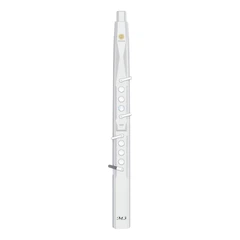
Chinese Hulusi It has a unique ethnic style and is extremely ethnic. Electronic Wind Instrument Hulusi has a good volume and 10 timbres, it is easy to learn and simple to use, especially suitable for beginners.

Chinese Hulusi gourd flute it has a unique ethnic style and is extremely ethnic.And it has a good volume and 10 timbres, it is easy to learn and simple to use, especially suitable for beginners.

Chinese Hulusi gourd flute it has a unique ethnic style and is extremely ethnic.And it has a good volume and 10 timbres, it is easy to learn and simple to use, especially suitable for beginners.

Chinese Hulusi gourd flute it has a unique ethnic style and is extremely ethnic.And it has a good volume and 10 timbres, it is easy to learn and simple to use, especially suitable for beginners.

Chinese Hulusi gourd flute it has a unique ethnic style and is extremely ethnic.And it has a good volume and 10 timbres, it is easy to learn and simple to use, especially suitable for beginners.

Chinese Hulusi gourd flute it has a unique ethnic style and is extremely ethnic.The Electric hulusi cucurbit flute has several distinct advantages. Firstly, it offers a wide range of sounds and tonal possibilities, allowing musicians to explore diverse musical styles and create unique sonic landscapes.

Chinese Hulusi gourd flute it has a unique ethnic style and is extremely ethnic.The Electric hulusi cucurbit flute has several distinct advantages. Firstly, it offers a wide range of sounds and tonal possibilities, allowing musicians to explore diverse musical styles and create unique sonic landscapes.
What is Hulusi Musical Instrument?
The hulusi musical instrument, also known as the gourd flute, is an indigenous instrument from china and the shan state. It is a free reed wind instrument that is held vertically and has three bamboo pipes which pass through a grourd wind chest; the center piece has finger holes and the outer two are typically drone pipes. Hulusi is a solo instrument and rarely seen in ensembles, however there are still many who admire the hulusi for its rich sound and captivating resonance, only falling short on volume.
Advantages of Hulusi Musical Instrument
Expressive tonal range
The hulusi musical instrument boasts a wide and expressive tonal range, enabling musicians to convey a broad spectrum of emotions and nuances through their playing. Its unique blend of mellow, warm, and resonant tones creates a captivating and emotive listening experience that resonates deeply with audiences.
Versatility in genres
Despite being rooted in traditional chinese music, the hulusi is capable of adapting to various musical styles and genres, including classical, folk, contemporary, and even experimental compositions. This adaptability allows musicians to explore diverse musical territories and expand the creative possibilities of the instrument.
Ease of learning
The hulusi's simple fingering system and limited number of keys make it an approachable and user-friendly option for both novice and experienced musicians. Its straightforward design facilitates rapid progress and skill acquisition, empowering learners to develop their abilities and confidently perform a wide array of pieces.
Cultural enrichment
Playing the hulusi offers a valuable opportunity to immerse oneself in the rich tapestry of chinese culture, history, and musical traditions. Engaging with the instrument deepens understanding and appreciation for the artistry and craftsmanship that have shaped the hulusi over centuries, enriching the musician's personal growth and artistic journey.
The Composition And Function Of Cucurbit Silk
The cucurbit wire is mainly composed of four parts: The main tube, the reed, the attached tube and the gourd.
Supervisor: The melody tube has multiple sound holes. The original old-style cucurbit flute of the dai people has six sound holes (the first five and the last one), which are more suitable for playing the national songs of the dai people. The more popular now is the cucurbit silk that people use more. The head is transformed from the original old head. There are seven sound holes (the first six and the last one), which can produce nine full-hole sounds and eight half holes (or combination holes), there is also a sound hole and two rope holes under the back of the main.
Reed: The sound-producing part is installed at one end of the bamboo tube. The shape of the reed tongue is an isosceles triangle and a rectangle. The two materials are mainly copper.
Attached tube: Auxiliary (chorus) voice tube. It is common for a single (long) sound to be issued by an attached pipe, and the treble is attached to the pipe. The sound of the fifth hole in the hair is optional; the sound of the first hole or the third hole is optional. The general cucurbit flute has only one high-pitched attached pipe. The organic cooperation between the attached pipe and the main pipe can make the music more dynamic. With the sound hole of the attached pipe, the attached pipe does not sound when it is pressed, and the attached pipe sounds when it is opened.
Hoist: The hoist acts as a funnel, and the airflow is transmitted to the main pipe and the attached pipe through the hoist. There are many kinds of gourds, and they are planted all over the country, and the shape of gourd is better.
Clamp: The main function is to stabilize the structure of the cucurbit wire, so that the attached pipe and the main pipe are firmly tied together.
Supervisor tail plug: It plays a role in making the pronunciation of the lower register more rounded.
Dismantling functional support: The main function is to organically combine the gourd and the bamboo tube. The bamboo tube is firmly inserted into the gourd, which is sealed and air-tight. Due to the use of this bracket, the bamboo tube can be disassembled at any time without sticking to the gourd.
Repair and Maintenance of Hulusi Musical Instrument
The maintenance of cucurbit silk
The cucurbit silk produces sound through the vibration of its own reeds and the resonance of the bamboo pipe, so the root of the reeds of the cucurbit is thin and the vibration it can withstand is limited. To have some control, just play at a normal volume. Many students who are just learning cucurbit flute, some can play very lightly and cannot make a normal sound, while others are too hard, resulting in distortion of the sound range, unable to pronounce in the middle and high range, especially the bass 567 everyone will play very hard. , yes, the bass area is more forceful than the middle and high tone area, but if the breath strength exceeds the strength required by the normal tone, the bass 5 (also known as the barrel tone) will become lower in a short period of time, and the treble 6 will be difficult to pronounce.
Handling of common problems
• When the cucurbit silk is played in a cooling state, the barrel tone will generally be high, and the mid-high range will be low, and there will generally be a deviation of about 10 cents. The main reason for such a situation is that when the reed is in a cooling state, the vibration of the base of the reed tongue will be very rigid, and even when the vibrating part rises, the length of the vibrating reed tongue will be shortened objectively, so the vibration frequency will increase, and the drum sound will also be reduced. It increases with it, but as long as it is played for a little time, as the temperature rises, the vibration of the entire reed becomes active and the sound is normal.
At this time, due to the low temperature, the vibration frequency of the vibrating reed tongue is not enough, so the rest of the sounds except the drum sound are low. In order to avoid this phenomenon and ensure that you can play normally at the beginning, you can press down the upper six sound holes before playing, and breathe a few hot air into the seventh sound hole on the back to preheat the reed and reach the normal tone. The required temperature, so that the playing state of the hulusi can be adjusted to normal without making a sound.
• Sofa in the mid-range, harsh shaking, bright treble, and low bass. These three problems appear at the same time, indicating that the angle of the reed is too high. You can use a sharp object to try to press the base of the tongue of the reed. Repeatedly adjust the height until you find the angle of normal pronunciation. If you can't adjust it, that's the reason.
Bass is the adjustment of the low-pitched tone. The low level referred to here is generally not more than 30 to 40 cents, and if it exceeds, the reed may need to be replaced. It is best to be handled by a professional manufacturer. If you do find a professional manufacturer to repair it, you must be careful when you operate it yourself, so as not to deform the reed.
The method is like this, if it is cucurbit silk, carefully pull out the main pipe from the gourd, try to thin the tip of the spring tongue on the main pipe with a sharp tool, pay attention to the direction and location of grinding, don't be impatient, every 2-3 strokes. After the knife, try to see if the sound of the barrel is accurate. After the adjustment, check whether there are burrs on the reed tongue. If there are burrs, remove them, and then put the main tube into the gourd and fix it.
Tips for Buying Hulusi Musical Instrument

Different materials of cucurbit silk
First, cucurbit silk is divided into different materials, including bamboo, plastic, ebony and mahogany.
Bamboo pipes and gourds are the most common materials used to make cucurbit silk, which are all made of original ecological natural materials.
Ebony and other materials will have a higher appearance in appearance, have a certain decorative effect, and have slightly better fall resistance.
Do not choose plastic cucurbit silk for study. First, because the plastic cucurbit is airtight, the water vapor exhaled when playing is easy to condense into water droplets and breed bacteria; second, its own sound quality is poor.
With the increasing number of cucurbit flute learners, the timbre, sound quality and craftsmanship produced are very mature, and a cucurbit flute of about 200 yuan can basically be used for learning.
Which tune is the best for cucurbit silk?
The tune of cucurbit flute is divided into three types: Including low, medium and high tone, and each type can produce different levels of tunes.
The bass includes: Big d, big g, big e, and big f.
Middle tones include: A key and b flat.
Treble includes: Minor c, minor d, minor f.
For beginners, you can only consider the minor c in the treble or the b-flat in the middle to study. For adults, it is recommended to choose the b-flat directly, because although the c-key cucurbit has a loud sound, the distance between the upper hole of the supervisor and the hole is very large. Small, it is not suitable for adults with relatively large finger distances, but children can give priority to c tune. The sound of c tune is loud and crisp. The famous song like phoenix tail bamboo under the moonlight is played by c tune hulusi.
How to choose cucurbit silk correctly for novices
From the point of view of workmanship, check whether the bond between the gourd and the bamboo pipe is beautiful and firm. There should be an appropriate amount of glue, too much glue at the bonding place for rough cucurbit silk will affect the appearance. Sometimes there is too little glue and it is easy to leak.
Choose the practical cucurbit silk, beginners should choose the professional type, the traditional rubber stopper is convenient and simple. Sliding cucurbit plugs are also available.
It is not advisable to choose the cucurbit silk made of sprayed paint, brushed gold powder, plastic and imitation jade, because the air permeability is not good, and the gourd is prone to mold, which will accelerate the oxidation of the reed and shorten the life of the cucurbit silk. It is also easy to breed bacteria.
Choose a piano shop with guarantee and complete after-sales service
The cucurbit flute is a relatively delicate musical instrument. In playing, problems can easily occur due to improper protection or incorrect playing method, and beginners cannot solve it because they do not know much about the instrument itself or do not understand it well. Therefore, when purchasing, you must choose a professional and friendly piano shop for purchase, and you need to have a good after-sales guarantee.
Good cucurbit flutes are selected and must be tested repeatedly. When we, as novice, cannot make a good choice of musical instruments, we can ask professional and reliable teachers to assist in the recommendation and selection.
FAQ
Hot Tags: hulusi musical instrument, Chinese hulusi musical instrument manufacturers, suppliers, factory, hulusi cucurbit flute, gourd flute, hulusi musical instrument, electric hulusi, hulusi flute, calabash flute


